Life Lessons, Thematic Patterns, and Character Development
While I can certainly appreciate the idea that life is a school where we learn lessons formed through our own unconscious conditioning, I want to go a bit deeper into this idea and examine its essence and what “life lessons” actually are, and how we facilitate them in a primarily unconscious manner. I would like to present this idea through forming a deeper awareness of our own part in what we call life lessons, by looking at them from both a detached and non-personal perspective (rationally), and from a deeply personal one.
Life lessons are never about what someone else is doing to us that we need to somehow learn a lesson from, which means no longer needing to repeat the situation or type of relationship that forms the basis for the lesson. A life lesson is formed from a deeply ingrained psychological pattern that’s a part of our nature and is formed initially through our formative conditioning as a child. We’re each conditioned (trained) with certain types of patterns played out as behavioral dynamics that follow a distinct theme. Whatever thematic pattern governs our family unit or social environment, is imprinted in us psychologically (mentally and emotionally) and we are trained to take on a play a particular role in that dynamic through our relationships and how we interact with others. Whatever relationship pattern we’re conditioned with forms the nucleus of what gradually becomes the basis for forming our identity. We shape our identity by how we associate with our own, self-generated experiences.
As we grow and our conscious mind begins developing, we identify not only with the role we play in that dynamic as a child, but with every role necessary in acting out that pattern. We become mentally imprinted with the “whole pattern”, which plays out as a life theme that shapes all the memories that ultimately form our mental paradigm (the informational structure of our mind). All our thoughts and feelings rise out of and take shape through our paradigm, forming distinct patterns that shape and determine how we perceive ourselves, others, and the world around us. It forms the mental filters that shape our perceptual lens.
All patterns, which are psychological in nature and origin, follow distinct themes with a distinct cast of characters, all of which are archetypal in nature. Each one of us is a multidimensional being in the sense that our nature and character is comprised of twelve cosmic or universal archetypes, represented metaphorically by the twelve archetypes of the Zodiac. We tend to think (have been taught) we’re only one of these archetypes, the dominant sign we were born under, when in reality, we’re a combination of all twelve, each of which is developed to different degrees. These twelve archetypes are combined as a formula that makes up our character and inner nature. As we go through different life situations, correlating parts of our character are stimulated and called forth as a means of playing a particular role in that situation. Whatever role we naturally take on acts to develop that part of us to a higher level, where it becomes more prominent, growing and transforming our character based on how we develop in relation to and with it.

Being conditioned to whole patterns means we play every role in that pattern, both consciously and unconsciously. We initiate the pattern, setting it in motion through natural behaviors and the way we interact with others. As we set a pattern in motion through a natural interaction, we experience ourselves through that pattern, while taking on a complementary role with everyone who participates in co-creating it as a form of life theme. Our mental influence coming into any situation stimulates the pattern we’re conditioned with in everyone around us, while also forming the basis for our perception in terms of what stands out and what goes unnoticed. All of what we call attraction or chemistry comes through a purely energetic vibration we’re always putting off that stimulates and emotionally connects to all others who have been conditioned with a similar life-pattern who naturally take on a complementary role in forming the same type of experiences. We’re always attracting and attracted to those of a similar nature and disposition to us. Those who are imprinted with a different or contrasting pattern, don’t stand out or interest us as being significant and simply become a part of the background activity. Some stand out because they stimulate us in some way, becoming a co-creator, while others just form a part of the background.
A behavioral dynamic is a pattern or life drama that has a distinct theme inherent in it. This theme is always associated with our self-esteem and forms the basis for the story we start telling ourselves that gives everything the meaning it has. It always involves how we’ve come to think of ourselves based on how we interpreted other people’s behavior and the events of our life, by making them “mean something”. We give meaning to our experiences at a point in our development when our rational, reasoning mind hasn’t fully developed yet. The meaning we give things as a child is always based on what emotion we’re experiencing at the time, how the experience made us feel, and is centered around us being the cause. We’re still in our subconscious, group mind, and don’t yet know how to separate ourselves from what’s happening around us, and don’t understand that our parents are individuals who have their own life to deal with. We make everything about us, and our fault somehow. When mommy’s mad it’s because we were bad or did something to make her mad, and it means she doesn’t love or want us. When we hear something being said about us, we believe it’s true and it becomes a self-fulfilling prophecy. Whatever we believe is true about us, acts to shape our self-perception and we create it as a reality (experience).
For example, a person conditioned with a victim mentality, usually due to dominating or abusive parents, need to have a “victimizer” in order to maintain their perception of themselves. Whatever perception they form becomes the story they start telling themselves as a means of shaping their identity. While they relate to being the victim as a child, as they grow older, they begin identifying with the perpetrator or adult in the situation, and act to abuse others in the same way they were abused. It’s all a question of which role in the same pattern we identify with at different points in our life and through different situations. Whatever feelings or behaviors we believe caused us to be abused as a child, we deemed bad and repressed, denied expressing and held inside, hidden away from the world, and over time, even from ourselves. Any part of our character we disown consciously remains a part of our character and continues playing out in an unconscious manner, where we still display the behaviors and attitude, without a direct awareness of what we’re doing or why.
All relationships, in the most basic sense, are codependent in nature. We need others to play a complementary role in our dynamics in order to keep it intact and repeating in a natural and automatic manner. A person programmed with being a victim in their life still displays the behavior and tendencies that instigate and provoke their own abuse, while also acting as a magnet for attracting and being attracted to others conditioned with the same pattern. This is why people stay in abusive relationships of various kinds, or why the abused child grows up to become an abusive parent. They usually take on the same attitude and behavior without a direct awareness of what they’re doing or why they feel the way they do. We’re shaped by others and our environment at an early age, and we become the same way as we mature and become adults. It’s so ingrained in us at an unconscious level that we don’t even know to question it.
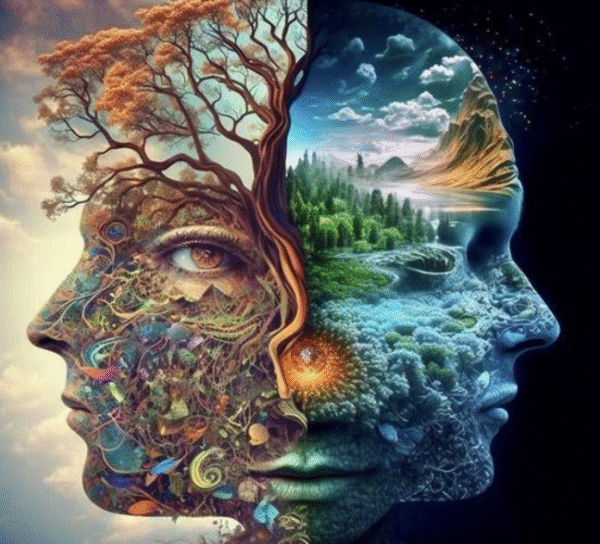
There’s an alternating current involved, where we flip-flop or move back and forth, playing different roles in the same pattern. It’s not just about recognizing that you’re a victim in your own life through your perception and way of being, it’s also about realizing how you’re unconsciously perpetrating your own abuse and feelings of being helpless somehow. You’re both the victim and victimizer in your own conditioned pattern, which plays out as an archetypal theme that simultaneously shapes your character in terms of what’s developed to a dominant role and what is rendered latent and unused. As a victim you feel powerless and at the mercy of others, and as the victimizer you feel powerful and in control through a form of justice and retaliation.
While we naturally attract and engage with those who play a complementary role in our theme, the real battle and dynamic being played out is within us in what we call the light and dark parts of our own nature. The light is the part of us we’re aware of and forms the basis for our decisions and what we use to experience ourselves, while our dark side, often called our shadow, are the parts of ourselves we deemed bad somehow and ostracized, cast out, or stuffed down so far, we lose awareness of them. The fragmented parts of our mind and character, disowned and cast out, becomes our adversary. Our demons are always battling for control and form what we experience as internal conflict. The part of us we consider evil or bad and deny having as a result. But even though we disown and lose awareness of being that way, they still act to shape our perception of others and the world around us, while forming unconscious behaviors that we continue to act out without a direct awareness of what we’re doing.
While we can look at this and ask ourselves what the lesson is to be learned through the pattern our identity is formed out of, we perhaps imagine that it’s to stand up for ourselves, take back our power, defend ourselves in some way, or quit associating with people who treat us like that. Yet this doesn’t work in terms of the pattern repeating itself in various ways, where we still attract the same type of people and willingly engage in the same type of situations. The only way to change the pattern is by working to transform what’s causing and maintaining it. This is done by recognizing the repressed parts of our nature operating at an unconscious and subliminal level and then embracing and harmoniously integrating them back into our character by finding an appropriate way to express them.
The only true value in what we call life lessons is they reflect our “whole nature”, including unconscious parts of ourselves operating in the situation. Once we follow the feeling back to the childhood situation where we first developed the tendency as a life theme and began repressing certain parts of our character as a means of playing a role in the family dynamic we were born into, or as a form of reasoning and problem solving. As an adult in the same type of situation, we can recognize how we’re interpreting it through our perception and intentionally form a different way of processing it based on giving it a different meaning. We can change the pattern formed by our own mental fragmentation, by harmoniously assimilating the disowned parts of ourselves to become whole again. As we reintegrate the parts of our character we repressed, learning how to express them in a healthy and beneficial manner, we work to change the aspects of ourselves that formed the basis for the dynamic.
When we no longer see ourselves as a victim to other people’s bad behavior, and we change the unconscious behaviors that provoked and maintained the pattern, not only does the tendency dissolve, but a new pattern is formed that takes its place and expresses our character in a more balanced and holistic manner. Once we no longer need to be abused to know who we are, and we begin realizing our adversaries are showing us fragmented parts of our own character, we can use it for healing ourselves and becoming whole again. So, to say you’re supposed to see life as lessons, showing you the unconscious patterns you’re playing out, is only part of a greater equation. You must recognize not only your role in that pattern and how you’ve shaped your identity around the story you formed about it, but the fact that in the most basic sense, you’re the one creating the whole pattern through both conscious and unconscious states. Where you oscillate between opposite poles of the same idea, generating and consistently maintaining the same feeling and type of experience. You must resist the tendency to put the blame for your experiences on the other people involved, exonerating yourself as a result.
When someone concludes that the lesson in a situation was you can’t trust people, because they lie, sneak around, hide things, and betray you, you have to ask yourself, how is it that I’m doing the same thing to myself? Someone can only betray you to the extent that you unknowingly betray yourself. When someone is plagued with not feeling good enough or worthy, and they consistently end up in relationships where the other person treats them that way, they need to turn and look back at themselves and ask, how is it that I’m judging myself, and what attitude and behaviors am I outwardly displaying that attracts people who criticize, belittle, and humiliate me? What part of me needs that, unconsciously asks for it, expects it, and feels I deserve it? How am I behaving that causes others to treat me that way, and why am I willing to accept it and stay in the relationship as a result?
We shape ourselves in the most basic sense by either relating to our family dynamic or social situation, and becoming just like them, or by contrasting and becoming what we imagine to be the opposite of them. But either way, we harmonize ourselves with that dynamic and continue to gravitate towards the same type of people and dynamic as a means of knowing who we are. So even though you shape yourself to be the opposite of your family or social situation, you still need the same type of relationships and situations as the basis for experiencing yourself. So, it’s a catch-twenty-two, so to speak. The only way to truly change it is by recognizing that you’re the one creating it through your own perception of yourself and others and becoming aware of the story you’re always telling yourself as a means of experiencing yourself. You must recognize what parts of yourself you deliberately changed as a means of fitting in, coping with or playing a role in the drama involved, feeling loved and wanted, and trying to make sense of what was happening and why.
Where you can begin shaping yourself, not in contrast or by relating to others and your environment, but from the deeper inner source of your character and higher nature. This comes by learning how to refrain from reacting to emotional triggers and other people’s behavior, while consciously deciding who and how you’re going to be in any situation, and then using your will to consciously discipline yourself. You have to use your rational mind to govern and direct your emotional mind. As long as your lower nature of impulse and emotions run you, you’ll stay stuck in the dramatic patterns of your formative conditioning and become a product of other people’s behavior and your environment.
Transpersonal Psychologist, Personal Transformation Coach, and Spiritual Teacher