How We Experience a World of Our Own Making
One of the most difficult things there are to truly grasp in terms of a firm realization, is that each one of us, no exception, is always perceiving and experiencing a world of our own making. Many contemplate this idea in a superficial way as a concept or theory that we sense is true while also struggling to truly understand it in terms of how we do it through purely mental means, or knowing how to work with in an effective manner by working to grow and transform our own inner nature. Often, when searching for answers or ideas on how to manifest, we entertain ideas like positive thinking, affirmations, or visualization techniques designed to intentionally manifest physical stuff, an ideal life, or our soul mate, only to realize it either doesn’t work, or only sort of works, or when we do finally get what we thought we wanted, we realize it doesn’t change how we feel. Sometimes getting what we wished for simply brings a whole new set of issues, many of which we didn’t anticipate, so they catch us by surprise, or lead to an even deeper form of disappointment and confusion.
This occurs because we don’t truly understand how it is we shape our outer world through our perception of it. We don’t understand that our mind, which is our consciousness, is what forms our fundamental nature and character. Our mind is our innermost being in terms of how we feel and think, what we expect or anticipate through our attitude, and what we long for as a desire for a certain type of life. It’s not one part or another, or one type of thought or another that shapes our experience, it’s our essence and our constitution as a whole being. We’re so in tuned to practicing things we’re told how to do or trying methods without realizing their true basis and operating almost completely out of a belief that they’ll work, rather than understanding and working intelligently by way of the principles involved. Anything we form a belief in we participate in creating mentally without realizing that it’s our belief that makes it seem true. Most are simply not aware of the deeper parts of their own character and live life primarily on the outer surface of their own existence.
Naturally, anyone who has lived awhile and grown in wisdom, sooner or later realizes that often what they thought they wanted or needed, once attained, doesn’t fulfill them or solve any problems or make them feel content, and instead leaves them feeling even more empty and hopeless than before. Affirmations only work when you believe in them and envision them as an experience that brings a particular type of feeling. Positive thoughts only work when they’re the natural result of how you feel. Visualizing what you want only serves as a metaphor that represents a particular type of experience and only comes about or takes on a corresponding shape through the resources available in your immediate environment. But even when a particular set of circumstances are produced as a correlation to your vision, you’ll still produce the same type of experience using those circumstances or situation.
The only way we can change our experience of the outer world is by changing how we shape our inner world as a corresponding reflection of our innermost nature and character, and by how we identify with our own self-produced experiences. It’s natural to think the reason we’re unhappy or unfulfilled in our daily life is due to our circumstances or lack of resources, and we imagine that if we can change our situation, then we’ll be happy. We build a model where we imagine that the outer world and others are what will make us happy, and as a result, we’re always looking outside for what can only be found inside. Our perception is formed naturally and automatically through the psychological filters that form the lens of our mental paradigm, which is our model of the world. The only way our perception changes is when our mental model changes through various forms of growth, character development, and by healing the fragmented parts of ourselves that we’ve come to disown, repress, and deny having. We heal psychologically by harmoniously integrating disowned parts of our psyche, returning it to a state of wholeness and equilibrium.
If we feel afraid, unsure, or lack courage and confidence in ourselves, we not only see and experience the reality of these feelings, but act as a magnet for attracting more or the same type of experience. It doesn’t matter what our situation or circumstances are, we’ll simply use it to create more of the same type of experiences that give us more of the same type of feeling. Our experiences only serve to give us more of the same feeling that shaped them. If we feel scared and uncertain, no matter what our situation or what transpires through a series of correlating events, we still feel scared and unsure of ourselves. We can tend to think that if we just get in the right relationship or situation that we’ll feel safe and reassured that things will be alright, yet no matter what situation we end up in, while it may seem different at first, still ends up eventually making us feel scared and unsure of what to do.

Related Articles:
The Art of Self-Creation and the Power of an “Ideal”
The Shadow and Ego – Self-Creation and the Art of Personal Transformation
A person who feels they’re inferior and not good enough somehow, where they simply don’t measure up, can form positive thoughts all day long, visualize ideal situations, or repeat affirmations about being worthy and lovable as a coping mechanism, and they’ll still end up feeling the same way at the end of the day. We’re all conditioned to feel a certain way through our upbringing, and we perceive life through a correlating series of mental filters formed out of our feelings, moral values acquired through what was being modeled around us, preferences in terms of what we like and don’t like, and beliefs formed by what we were taught, told was true, or shaped through our experiences and the conclusions we drew from them. All of this is done at an early age where we exist in a primary state of hypnosis, so it becomes ingrained in us mentally and emotionally.
We’re all born into this world as infants with only our subconscious developed and working, while our higher conscious mind resides within our subconscious in seed form. Our subconscious does not have the ability to think rationally, understand the reason behind things, solve problems, or discriminate as a means of evaluating our situation to make calculated decisions, and simply takes in whatever is being modeled and talked about by the people around us, forming a joint experience born out of a shared reality. We’re trained early on to function as a normal part of our family unit. We become a part of the dynamic being played out as an everyday reality, while gradually taking on a particular role in that dynamic. This becomes ingrained in us, shaping the nucleus of what is eventually grown into our model of the world once our conscious mind begins developing and we start thinking about what things mean. The meaning we give things is what shapes our experiences and forms the basis for the story we begin telling ourselves. If you simply reflect on your own thoughts, you’ll realize that they all follow a consistent storyline as a form of life theme, where one part of you is always describing, explaining, and telling another part of you what everything is about and what it all means.
Our subconscious is a passive receptor that takes in the will of our conscious mind, formed as our thoughts and feelings, and the will of others, formed by what they say, talk about in general, and what emotions they’re expressing, without resisting or questioning it, and turns it into an experience of reality and of ourselves as being a fundamental part of that reality. There’s really no separating the self from reality, because they’re the same thing. The subconscious doesn’t have the ability to resist, question, or evaluate a command or action that appears separate from the consciousness of the whole (group mind) and their environment. It’s always present in the moment, is driven by feelings and impulses, and functions in-sync with its environment. It’s of the same mindset and vibratory frequency as everything around it and always acts in harmony with it as a natural response. It functions as a cohesive part of the group-mind and herd mentality. It doesn’t perceive itself as being an individual or set apart from everything around it, and as a result, is shaped by others and its environment through a purely natural process that’s similar to mesmerism or what we now refer to as hypnosis.
As the conscious mind begins developing and taking shape within the womb of the subconscious, it resides within the feelings and reality of the subconscious and its immediate environment and begins using it as the means for telling a story about itself and the way life is. Our life takes on the same theme as the family dynamic we were raised with, where our character is initially shaped by the role we took on within that dynamic. We begin forming a story about our life as an essential part of our living situation and the behavioral dynamic we were trained to and eventually came to play a natural role in. The conscious mind is the creative, intelligent, willful aspect of our mind, that takes what we’re feeling in any situation and translates it by giving it meaning and then uses the meaning it gives things to begin telling a story about itself and the way life is. This part of us is the archetypal man and myth maker. It’s self-creating. It creates itself through the meaning we assign to certain types of events and behaviors, as a means of having an instant filtering mechanism that functions without delay, that says, “this means that”, and whenever that happens, it means this about me, others, and the way the world is in general, forming the basis for a spontaneous reaction. All our reactions, which are triggered by emotions and come without thinking, are formed by the patterns of our conditioning.
3 Levels and Scales of Reality
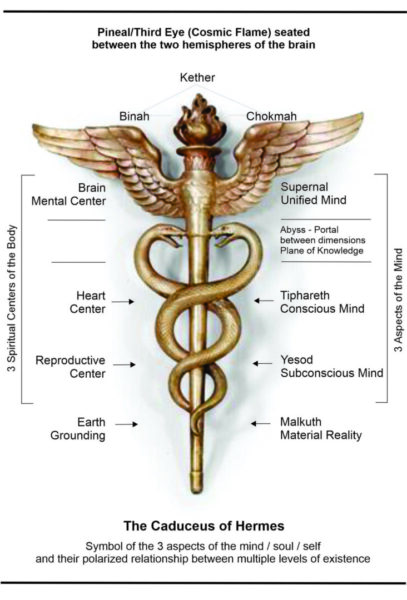
One of the interesting parts about this process that we seldom recognize, even after years of study and contemplating our own experiences, is that our conscious mind creates on 3 levels and scales simultaneously. The meaning we give an event or behavior, means something about the people involved, the way the world is in general, and about us in relation with it all. So, we not only create our experience of the moment, but also of society and the world as a coherent whole, where we’re at the center of it all. As we begin telling ourselves a story about life based on meaning, we begin shaping ourselves by way of that story, and what type of experience we create as an expression of how we feel that always serves to give us more of the same feeling, while meaning the same thing about us. In other words, it’s a giant loop. The story we begin telling is born out of a feeling we acquired at an early age that makes us a particular type of person, caught up in a particular type of world and reality, where we have to deal with certain types of people, all of which combine to produce and sustain the same type of feeling and experience. We’re the ones creating it all without realizing that’s what we’re doing, because the biggest part of the operation is conducted in a purely natural and automated fashion out of an unconscious state, without us being directly aware of being the one conducting it.
All change, in the most fundamental sense, comes gradually by being challenged in some way with our own morality and weaknesses. We grow internally based on what we resist externally. If we continue to give into and maintain or feed feelings of fear and insecurity, then nothing changes and remains the same, and we remain locked within the prison of our own imagination. If, on the other hand, we decide to rise up, accept the challenge and face our fears by choosing to embody courage and confidence, we dissolve our fear, replacing it with a whole new sense of ourselves, and the experience created begins transforming our fear. It doesn’t completely erase it or transform it through a single act or how we choose to interact with a certain situation, but it becomes the foundation stone out of which we can continue to choose courage over fear in all situations. We must begin building up and accumulating experiences of being strong, unafraid, and confident until they gradually transform feelings of weakness, fear, and trepidation. It’s only with practice and consistently choosing to resist feelings of fear and anxiety that we begin developing the counterbalancing parts of our character, creating a more balanced mindset. Once you no longer feel afraid out of a lack of confidence or belief in yourself, your perception of the world and others changes accordingly as an outer reflection. You’ll no longer attract what makes you feel afraid or stimulate others in a way that causes them to take advantage of you or become aggressive towards you.
What we must realize about Nature is we’re always attracting the complementary frequencies and consciousness of our own mental state. If you’re afraid and feel uncertain, you attract more of what makes you feel afraid and uncertain. You act to stimulate the consciousness that preys on the weak in everything around you. Fear is a magnet that attracts all the energies and behaviors associated with it. In Nature, if we feel afraid of an animal, they sense it, and will become aggressive towards us or try to intimidate and attack us. You attract whatever is complementary to the vibe you’re putting off, while stimulating the behavior associated with how you feel. This principle was expressed in the allegory of “Daniel in the lion’s den”. The reason he wasn’t attacked and devoured by the lions, had nothing to do with praying to God or being helped by a supernatural power, it was because he wasn’t afraid of lions. He understood how our personal will works in taming wild animals through our gaze and mindset. He recognized and understood that predators only prey on the weak. The lions didn’t sense any fear, so they didn’t consider him a threat or prey to be overcome and eaten. If he had become scared of being ripped apart and eaten, he would have sent out that vibe, and that’s exactly what would have happened. In Nature, fear stimulates and attracts aggression. As willful beings with a conscious mind, we attract to us what causes and will serve to maintain our fear. We literally turn fear into a reality as a means of experiencing fear.
It’s a good practice to always observe and reflect on your fears and things you experience a lot of anxiety about. Whenever you feel scared, nervous, or anxious regarding something that doesn’t pose an actual threat, choose to embody courage while having faith in your ability to handle or deal with it effectively, and make yourself step into it and do it in spite of the fear. But only when you actively choose to embrace courage and confidence, because if you don’t and maintain feeling afraid, your fear will overcome you and become your adversary. Courage isn’t about not feeling afraid or anxious, courageous people feel the same fear everyone else does, they simply choose not to let it stop them and move forward in spite of fear with a sense of faith and optimism in their ability to handle whatever they need to handle.

If you commit to making yourself do things you’re normally afraid of, what you’ll find is that as soon as you step into it and begin doing it, the fear seems to dissipate and fade away, and you feel more alive and present in your experience than ever before. From the realization that comes from stepping into your fears or continuing to move forward in spite of your fears, you’ll find that fears formed out of a conditioned mindset and over active imagination begin subsiding altogether, and you begin developing (experiencing) courage to encounter the unknown and become confident in your ability to know what to do in unexpected and unforeseen situations. As you begin gaining confidence in yourself, a whole new world of possibilities open up, and you begin experiencing parts of yourself you’re normally not aware of. The only purpose of fear that’s not due to an actual physical threat, is to stop you from moving forward and prevent you from trying. We only develop courage in situations where we also feel afraid, because courage and fear are complementary to each other, where one serves as the means for developing the other.
Allow yourself to realize that reality isn’t an objective or fixed idea that appears the same to everyone. While it is objective in the sense of being formed as Nature and creation, where everyone sees the same material objects, such as a tree, flower, house or car, everyone will perceive and experience the same thing in a different way through their perception of it. In the most basic sense, perception is reality, and reality is experience. While we can safely say we have no real control over reality as a material construct that exists independent of us, we have full control over how we experience ourselves through and as a part of that material construct. Experience is formed by uniting the outer world of objects with the inner world of thoughts and feelings, using reality as the stage and setting for producing experiences that we translate into memory of ourselves.
Some people believe that experience is something that occurs naturally beyond our ability to change or influence it, but if you simply still your thoughts and observe your own experiences, while realizing that everyone experiences the same thing in a different way, you’ll come to realize that experience, not reality, is something you create through a purely internal process. Reality as an objective whole simply sets the stage and provides the means for us to create ourselves by how we create our experiences, which are always experiences of ourselves on both a greater (universal) and smaller (personal) level at the same time. What you see outside of you exists initially as a reflection of what’s inside of you. The way to change the outer reflection (perception) is to change the inner source producing and sustaining it. The same situation and series of events can be made into a drama, adventure, comedy, or tragedy, based on the telling. Allow yourself to recognize your own style and life theme as a story always telling yourself . . . about yourself. Not as a person, but as a whole reality. Allow yourself to recognize the theme that underlies and being used to shape all your experiences, where you make everything fit into the same overall storyline as a means of forming a consistent experience of yourself and your life. While you can change your situation, relationships, and physical circumstances, your story as a life theme simply plays out in a new setting with a new cast of characters. You still experience yourself in the same way through a different setting and environment. The outer world and a particular set of circumstances have no meaning outside of providing you with the means for experiencing yourself, and creating yourself through your own experiences.
Transpersonal Psychologist, Personal Transformation Coach, and Spiritual Teacher