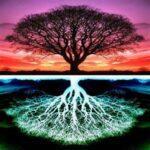
Learning to Realize and Understand Your True-Life Purpose
Realizing and stepping into your life purpose can be difficult for many people due to the fact that we all have two aspects of our mind, soul, and self. We’re all inherently dual natured beings, with both a terrestrial and celestial nature. One mortal and temporary, one immortal and eternal. One part of us is made of the kingdoms of the Earth, governed primarily by instinct and emotions, while another part is “in this world, but not of it”. The interesting part about our duality is that one flows in a completely natural and effortless manner, prompted by emotion and impulse, shaped almost exclusively by others and our environment through our formative conditioning, while another part requires self-awareness, realizing our true abilities as a creative being, and our soul’s purpose in coming here, which only comes about through a vision and intentional effort undertaken in a completely conscious manner.
The two aspects of our mind we’re always working with while manifest in the material world, is our subconscious, which forms the basis for our lower nature and personality, and the identity we form through association with our family unit, group, or community; and our self-conscious mind, which forms our higher divine nature and identity forged by our own will and ability to be self-determined as a sovereign being governed by our own conscience and will. These are polar aspects that are complementary in nature, and form our higher and lower nature, one animalistic and a product of Nature, the other divine and a product of our own ability to create ourselves. Through and awareness of our dual nature, we also come face to face with the elusive question of whether or not there’s such a thing as “free will” or is free will just an illusion created by a greater will that guides our destiny beyond our ability to control it or change its course. The answer is that both are true. There’s a fundamental paradox that exists between the polar aspects of our mind and inner nature, making them even more difficult to understand, until you reach a point in your own spiritual development where their relationship begins making perfect sense.
We’re often taught to oppose ourselves by seeing one part or certain aspects of our nature as bad or evil, and other parts as good and divine, where we become our own adversary, which gives rise to constant inner turmoil, instead of realizing that these are complementary (polarized) aspects of the same reality. One is necessary for the other to exist. They literally act to stimulate each other into an active state of expression and ultimately serve to define each other through the joint experience created. One creates and maintains the greater reality in which the other lives and forms all its activities, and together, form the basis necessary for experiencing ourselves. The higher soul’s only true purpose in manifesting within the material world is to know itself, and we only gain knowledge of ourselves through our own self-generated experiences. As we experience ourselves through our own mental projection, our experiences are translated into memory that’s integrated into the greater memory of our mental paradigm. Our mental paradigm is formed out of all our life experiences molded into a single memory that serves as a model or astral blueprint for consistently producing and maintaining reality as an archetypal theme.
For this inquiry, we’ll focus our attention on the topic of our soul’s purpose in being here, and what our ultimate mission is as a higher, self-creating being. Our lower nature and self, which are formed by our subconscious mind, are what you might think of as “created”, which means it’s the product of outside forces and a group mentality of some kind, while our higher nature, which is associated with our self-conscious mind, is the “creator”. These two aspects of our mind play different roles and purposes in producing the same reality. While operating within our lower nature, we function in a similar manner to all animals on the planet and are governed primarily by emotions that motivate instinctual impulses and primal passions, where our main purpose is procreation, continuing our species, and survival, which comes as a form of self-preservation and determination. This part of our nature wants only to fall in love, get married, set up a home, have a family, while also working to protect and provide for the family as a single unit.
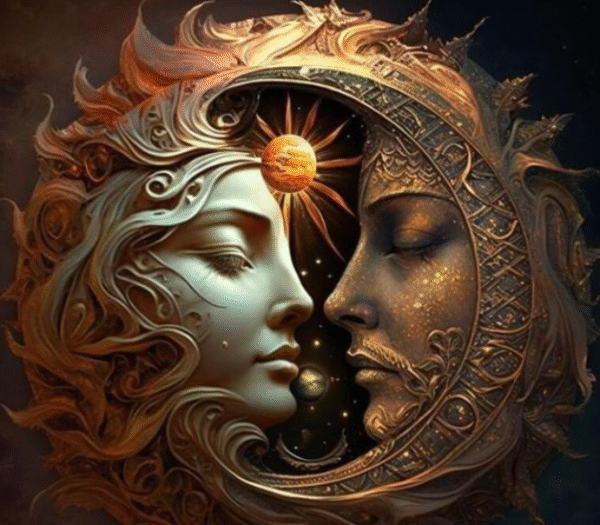
This is a natural drive for most people and comes without thought or effort in a completely natural way, or unconsciously, so to speak. This secures the bond to the earthly realm of Nature and determines the destiny of the person who lives life in a predominately unconscious manner. A person who lives almost exclusively out of their animal nature and instinctive drives, eventually surrenders their immortality to become mortal, and remains a part of the group mind that they formed their identity around when they die. This is how soul groups are formed, where we lack a sense of ourselves as an individual and form our identity as part of a group or tribe. At death, these two aspects of our soul separate, and what’s of the earth stays with the earth, and what’s of the heavens, returns to the heavens. This separation occurs naturally through vibration and resonance.
The heavenly, or divine aspect of our nature and self-conscious mind, is motivated by a different type of desire and is the only part of us that’s actually immortal and transcends the physical plane after leaving the physical body. What ties the mortal and immortal parts of ourselves together, is our inner nature, character, and morality – which form what we refer to as our “self”. This is referring to our true universal self, not the false identity we form with our current body, personality, and life situation. It’s our character and moral nature that forms the nucleus or kernel for future lifetimes. If we develop through purely natural means, which means we remain fundamentally unconscious and let our life take on a course of its own, our spiritual evolution, like the evolution of Nature, is painfully slow, requiring hundreds of incarnations to achieve significant changes in our moral development. But if we use our higher mind and will while working through natural laws that govern all life within the cosmos, we can speed up our evolution while developing our character in an intentional and deliberate manner.
When we remain unconscious, which means unaware of our higher nature as spiritual beings, we’re subject to fate, where life plays out in what seems like an automated fashion, seemingly beyond our ability to direct or influence the direction it takes, and we become a product of our environment and the will of others. Fate becomes an outside power that imposes what seems like a higher will on us as a form of karma that we have to accept and live out in order to redeem ourselves. Destiny is formed when we remove our focus from our outer circumstances and realize that we are in charge of how we experience ourselves in relation to the world around us, and we begin actively forming how we experience things and how we shape ourselves by way of our own self-produced experiences. While we can’t always control the events of our life or the actions of others, we are always in control of how we experience them.
In the normal sense of living in a primarily unconscious and natural manner, our life purpose, like everything, plays out in an automatic manner. All we have to do is live out of our emotional states and the natural impulses they form and set in motion. No effort or vision for our life is required. We build our identity and character out of the group mind or family unit and society, and without them, we don’t know who we are or where we belong, and what we’re meant to do. We shape ourselves in relation to our immediate environment and the will of others who dominate and control us. This identification with our material circumstances and situation is what forms our “false sense of self”, or what’s called the false ego. It’s false because it dies along with the body and personality it was built out of.
It’s interesting to note that a modern theme is that the “self” is an illusion and something we make up, and therefore doesn’t really exist, when, in the ultimate sense, it’s the only thing that is real. But the term self isn’t referring to our personality or identity formed in relation with our material circumstances, it’s our character and innermost nature, which is universal and dynamic in essence. This is the part of us that’s self-created and self-determined. Shaped by our own hand. It’s our inner nature that we develop through our physical existence while also transcending it, moving into a higher dimension when we leave our body that’s set apart from the material world. When we leave our physical body, we’re no longer combined with the material realm and reside solely in the mental realm of spirit.

Probably the easiest way to recognize and undertake your higher life purpose, is to focus almost exclusively on your character and soul’s essence, formed as memory of yourself. Get a journal or notepad, and write down all of your weaknesses, character flaws, and habitual tendencies that are destructive and undermine your ability to create in a deliberate manner. Be honest with yourself, and resist going off into all the ways you can justify your right to be that way. The reason we continue to harbor weaknesses and flaws, supporting and strengthening them as a result, is we have a reason for being that way that we use to justify, explain, and maintain them. These reasons are always based on others, what happened to us, and our life circumstances. Remove all filters and excuses for why you’re the way you are and simply focus on your innermost being and ability to evaluate yourself in an impartial and objective manner. Notice the story you’ve built around your weaknesses and character flaws, then detach from your story, and ask yourself, who and how would you be without that story? What new story could you tell in overcoming them? Learn to tell stories about your life that are empowering and play on your strengths, instead of supporting your weaknesses.
After you get a clear idea of what your weaknesses and flaws are that lead to destructive habits and addictions of some kind, think about their opposites and which traits would contradict and serve to transform them. This is typically laid out as vices and virtues, which are opposites of each other, providing the means for self-administering your own development. Again, keep your mind from going off into all the reasons you have for being the way you are, and instead, form a vision of yourself being different, and play it out in your mind as an experience of yourself. Recall a situation where that trait or weakness was played out, but instead of embodying the attitude of the flaw, embody the attitude of its opposite, and play out that same situation in a new way according to the desired traits. Recall a situation where you felt scared or intimidated, unsure of yourself and caving in to the will of someone else, reflect on how you felt and what was going through your mind as it happened, and choose to embody a sense of courage and confidence in yourself, and imagine how that would have transformed what happened, producing a new result. Do this several times with the same trait played out in a variety of situations, transforming them into a new experience and result.
For example – if you have a tendency to be dishonest, lie allot, or hide how you really feel, regardless of the reason why you do it, which simply justifies your right to be deceptive, recall a time when you lied about something, and instead of lying, have the courage to be honest and tell your truth, while also imagining how it would have changed how things played out. Think about how you could have been honest while delivering it in a way that the other person or group of people would understand and not feel hurt or upset by. Make it about you and how you felt, and not about them. If you have a problem with feeling insecure allot, regardless of why or what’s it about, recall a situation where you felt and acted that way, and instead embody an attitude of feeling confident and sincere. Again, focus on your delivery in terms of how you say and do it, and the attitude behind what you’re saying, without being harsh or defensive. Think about how to express new traits in a harmonious and beneficial manner. Where they’re constructive instead of destructive. Where you demonstrate and elicit a sense of respect and admiration from others, instead of hatred and resistance.
Many times, the reason we resort to what we feel is wrong or not the right thing to do in a situation, is because we don’t know how to be the way we want to be as a positive gesture or stance. It’s nearly always the delivery and how you say something in terms of your attitude and tone of voice that causes the problem. To transform one character trait to another usually requires you to practice being a different way, until you perfect it and build it into your muscle, so to speak, where it comes naturally. You must form a new vision of yourself being the way you want to be. You can only do what you can first imagine yourself doing. The key to utilizing your will lies in how you use your imagination. Visualizing something is the prerequisite to doing it. You have to practice something repeatedly, where it comes as a natural response without having to think about it in the moment it occurs.
Another way to develop yourself that takes a different kind of effort (will) and requires you to develop different abilities, is to commit to always being the best you can be at every moment of your daily life. Not just the big moments, but in the most ordinary sense. Stay present in your daily life, calm distracting thoughts and unruly emotions that play out continuously in a habitual manner, and focus your attention on what you’re doing, with an attitude of doing it well. Apply yourself. Most of our activities are performed in a semi-unconscious state, where we do them while thinking about something else. The most basic creative power we have is our thoughts and imagination. We walk through our life hypnotized by our past and the habitual thought processes that run constantly on autopilot. Decide to stay present in your life and focus your attention exclusively on what you’re doing, no matter how mundane and insignificant it may seem, and use that moment to develop yourself through and by way of it. This will not only develop your character in a natural way through your material circumstances, but you’ll also teach yourself how to be present in your life, which means aware and conscious.

We develop ourselves through choosing how we want to be and then consistently practicing being that way until it starts becoming natural. Once it becomes our natural way of being, we can choose to transform another trait that’s not directly influenced by the newly developed one. What you’ll notice about character traits is that developing one will systematically require several others to do. For example, transforming dishonesty with a decision to always be honest and speak your truth, requires self-awareness in terms of what honesty means, while also requiring courage and confidence in believing in yourself, along with tact and precision in terms of how you communicate it to others. In every moment where you would normally lie or hide how you really feel, you’ll come face to face with how you really feel, and this deepens your self-awareness and ability to be honest with yourself. We lie to ourselves in the same way we lie to others. Being honest will require you to also embody compassion and develop your ability to express it effectively, which will fill you with a sense of integrity, deepening your respect for yourself.
Traits are not singular, they’re a multifaceted network where every trait, whether you’re aware of it or not, is correlated to every trait we possess, and always functions as a whole system. What we feel inside produces correlating thoughts, which stimulate correlating emotions, which automatically produce natural behaviors and determine the relationship we form with life. While we may not have control over our environment, other people, or what happens to us, we always have control over how we experience what happens. It’s our experiences that are translated into memories of ourselves that form our soul’s essence and mental constitution, which is the part of us that’s immortal and forms the basis for succeeding life experiences.
The only value our physical world and personal existence has is that it provides the basis necessary for experiencing ourselves and developing ourselves by way of our own experiences. One sets the stage and ideal environment for the other to create itself through. Not by identifying with our current personality and particular life situation and circumstances, but by using them as the means for developing ourselves to a new level of self-awareness. We use our material world to develop our character and inner nature, which is the part of us that’s universal and eternal in essence, and transcends our personal existence when we die. If we build ourselves out of our current life situation and personality, we die with our body. Whatever we build ourselves out of as a means of experiencing ourselves and knowing who we are through our own experiences, determines our destiny as either a mortal or immortal being.
This can be understood in a purely practical sense by realizing that what’s call a “life-crisis” of some kind, which means an identity crisis, comes when what we have wrapped ourselves around as a means of giving our life purpose and meaning, falls apart or gradually goes away, and we’re left not knowing who we are or what to do, and as a result, we immediately try to find another situation or relationship that we can wrap ourselves around and rebuild our identity out of. The same thing happens when we die. If we don’t know who we are apart from the life we’re leaving, we seek to immediately reincarnate into a similar situation as a means of knowing who we are. When we develop our character to be of a more universal nature, where we use our life situation as the means of perfecting ourselves and learning how to create in a meaningful and productive manner, forming our identity in relation with our higher self as an ideal that’s set apart from our physical body and particular life circumstances, we no longer need our physical body or reality to know who we are. Our soul, which is comprised of the memory we create through living, remains intact after separating from its physical existence, and transcends the current dimension altogether, moving into one that’s correlated with its character and inner nature, which it acted to consciously develop while alive.
Transpersonal Psychologist, Personal Transformation Coach, and Spiritual Teacher

Related posts:

Becoming More Conscious: How we Replace Reality with Illusions

Relationship Dynamics – “Behavioral Patterns as Life Themes”

Subpersonalities – Internal Conflict and the Voices in Your Head

Exercising the Power of Choice to Create Your Life
The Archetypal Nature of the Spirit, the Creative Power of the Soul and the Nature of the Self